From cave paintings to posts on each other’s Facebook walls – we have come a long way!
Interestingly, the first form of human communication was not using symbols or paintings. It is referred to as the ‘origin of speech’ which dates back to 500,000 BCE where humans used phonological sounds and made use of tongue, lips, and vocal cords to express themselves.
Humans are social beings, and communication has been an integral part of our life.
According to Ethnologue, a research center for language intelligence, there are about 7,139 languages in the world that are spoken today. And yet, only 23 languages are spoken by more than half of the world’s population. Linguists estimate that 50% of the world’s remaining languages will die out by the end of the century.
Here are 5 of the oldest languages in the world which have survived and flourished through the years:
1) Arabic
Number of Arabic speakers worldwide: 422 million
Country of origin: Arabian Peninsula
Earliest reference: 1500 years ago
Number of letters: 28 letters (all consonants, and is written from right to left.)

Spoken by 422 million people, Arabic is one of the most spoken languages in the world. Arabic is a Semitic language (an Afroasiatic language), which emerged between the 1st to 4th centuries A.D.
Unlike other languages, Arabic letters are written in abjad script from right to left and Arabic numbers from left to right.
Arabic is the official language used in the Islamic sacred book, Quran, and hence the influence is seen in Islamic countries.
Several other languages have many Arabic loanwords, so does English! Some examples include alcohol (al-Kuhl), coffee (qahwah), algebra (al-jabr), etc.

2) Tamil
Number of Tamil speakers worldwide: 75 Million
Countries of origin: India and Sri Lanka
Earliest reference: Between 3rd and 2nd century B.C.
Number of letters: 30 (12 vowels, 18 consonants)

Tamil is spoken by more than 75 million people and is the 20th most spoken language worldwide.
Tamil belongs to the Dravidian family of languages spoken by more than 220 million people. Tamil is one of the longest surviving classical languages and an official language in Sri Lanka, Singapore, and Tamil Nadu (Indian state).

The earliest reference of Tamil literature records short inscriptions dating between the 3rd and 2nd century B.C in caves and pottery.
3) Greek
Number of Greek speakers worldwide: 13.5 Million
Country of origin: Greece
Earliest reference: 1450 and 1350 BC
Number of letters: 24 letters

The Greek language holds significant influence in the history and development of the Western world; especially in mathematics, science, medicine, astronomy, philosophy, and even inspiring other languages. Several words in the English language are derived from Greek. The word ‘alphabet’ is derived from the first two letters of the Greek language- ‘alpha’ and ‘beta’.
The earliest evidence of the language was found in Messenia in Greece dating between 1450 and 1350 BC, making it the world’s oldest recorded living language.
Adopted by at least 13 million people globally, Greek today is principally spoken in Greece and Cyprus, including several minorities and immigrant communities in other regions.
4) Hebrew
Number of Hebrew speakers worldwide: 9 Million
Country of origin: Israel
Earliest reference: 10th century BCE, 3000 years ago
Number of letters: 22 (all consonants)

Hebrew is an ancient and the only Canaanite language still in use. Hebrew was originally referred to as ‘Yehudit’ (the language of Judah).
The history of Hebrew is pretty fascinating!
In fact, if Hebrew were a human, it would be the best example of ‘The Lazarus phenomenon’ – in this case, the cessation of the language lasted for almost two centuries.
Between 200 and 400 AD, after the unsuccessful Bar Kokhba revolt (also called Second Jewish Revolt), Hebrew ceased to be used in everyday spoken language. The language was dead for almost two centuries because of a long period of tension and violence.
Modern Hebrew is the official language of Israel and is now spoken by more than 9 million people in the world.
5) Sanskrit
Number of Sanskrit speakers worldwide: 10,000
Country of origin: [Controversial between the Indian subcontinent and Northern Syria]
Earliest reference: As early as 1700-1200 BCE
Number of letters: 47 letters (14 vowels, 33 consonants)

Belonging to the Indo-Aryan branch of languages, Sanskrit is one of the oldest Indo-European languages in the world.
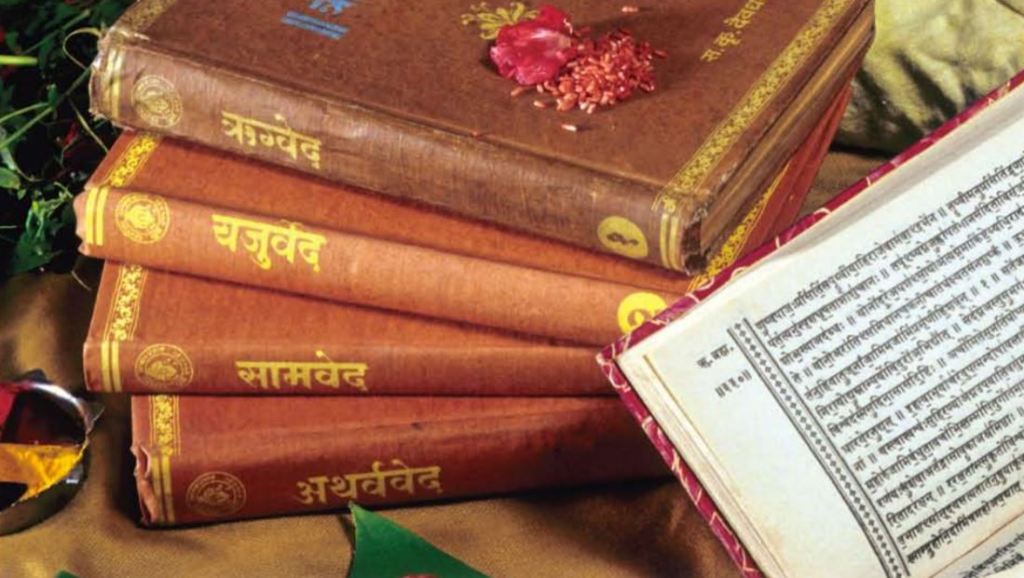
Sanskrit is regarded as a sacred language in Hinduism. Literature in Sanskrit is divided into two types: Vedic and Classical. The oldest Hindu sacred scriptures such as the Vedas, Upanishads, Agamas, The Bhagavad Gita were written in Vedic Sanskrit. During the Vedic period, knowledge of Sanskrit was regarded to be a symbol of high social class.
There are hundreds of words used in English which are originally derived from Sanskrit. Few examples are mother (matr), father (pithr), grass (ghas), avatar (avatara), man (manu), etc.
Although with time, the usage of spoken Sanskrit has drastically reduced, it continues to be used in religious textbooks of Hindu, Buddhist, and Jain.