I Am She by Butch Decatoria
I am she who waits through the night.
I am she who equals the strength of his light.
A woman, in her entire life, plays several roles, and she shoulders each of these responsibilities with equal stride. The power of a woman to give life is the sole reason we exist. It is because of her that society does not die out.
Here are five communities where women oversee responsibilities of power: politics, social privileges, control of property, social structure, to managing finances – you name it!
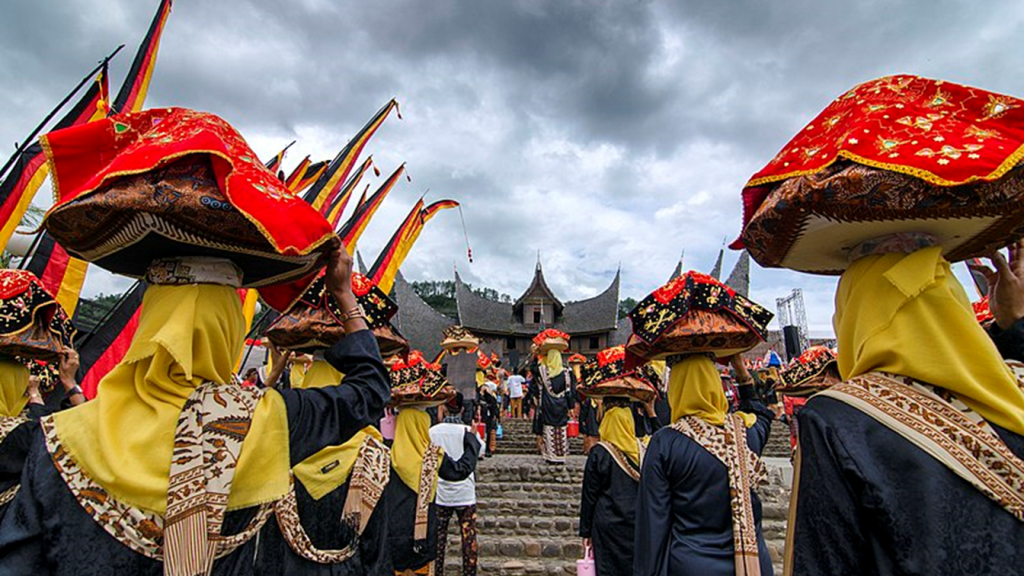
Minangkabau, Indonesia

Also known as Minang, Minangkabau are indigenous to West Sumatra in Indonesia. With a total population of about 8 million, the Minangkabau are the largest surviving matrilineal society in the whole world. Family name, ancestral property, etc are all passed down from mother to daughter, and a man is considered a guest in the wife’s home.
Khasi and Garo tribes, India

The Khasi and the Garo tribes belong to the north-eastern state of Meghalaya and are said to be one of the largest surviving matrilineal cultures in the world and the only one in India. The reference of the culture is mentioned in the epic Mahabharata as ‘Nari Rajya’ (female kingdom).
The dominance of women in financial and domestic matters is still prevalent, and a trip to the local market will be enough to demonstrate that. Women are seen running businesses at local shops, vegetable, and meat markets, to selling handicrafts while men assist and follow women’s orders.

Children receive the mother’s last name, while the youngest daughter inherits ancestral property and men move into their wife’s home once married.
Bribri, Costa Rica

The Bribri are native to Costa Rica, mostly occupying regions of southern Costa Rice and northern Panama. They are one of the oldest living matriarchal societies in the world. Living in isolation from the rest of the society and speaking their language has helped them maintain their indigenous culture. Their population is estimated at only about 12,000.
They follow the clan system of the matrilineal social structure and is determined by the clan of a child’s mother.

Cacao has a special significance in Bribri culture, and only women have the right to prepare the sacred drink with cacao, used during special occasions and ceremonies.
Mosuo, China

Their lineage is traced from the female side of the family.
The passing on keys of the household storage to a younger family member is symbolic of Ah mi transferring her property rights and responsibilities and choosing the female successor.

Walking marriages are also a common practice of Mosuo culture.
Umoja, Kenya
Umoja is unlike any other and the newest matriarchal culture on the list.
Umoja is a small village in Kenya founded in 1990 currently housing around 50 women and 200 children.
The name ‘Umoja’ means unity in the Swahili language, and believe it or not, the village is a ‘no man’s land’, as men are banned from entering the village.

The village was built by a group of women who survived rape by local British soldiers. It is estimated that in the 1990s, more than 1400 women were raped by British soldiers in the region.
Rebecca Lolosoli, a resident and who narrowly escaped a rape began her commitment to the feminine cause. She is the official founder of Umoja and the current matriarch.

The village now is a refuge for women fleeing sexual abuse, and the residents enjoy social and economic independence.
Matrilineal societies are rare, but they do exist and are thriving in several regions around the world. They are different from patriarchal ones and are considered more nurturing, and in general, more egalitarian.
Do you know of any other culture practicing matrilineality? Share your views in the comments.